
源代码放在sharesources@126.com的邮箱的收件箱里,用户名:sharesource,密码:javafans
希望保留给有用的人,谢谢。
取这样一个标题太大,吸引眼球嘛@_@。
事实是最近读《j2ee设计模式》讲述表达层模式的那几章,书中有一个前端控制器+command模式的workflow例子,就琢磨着可以很简单地扩展成一个mvc框架。花了一个下午改写了下,对书中所述的理解更为深入。我想这也许对于学习和理解设计模式,以及初次接触struts等mvc框架的人可能有点帮助。因为整个模型类似于struts,我把它取名叫strutslet^_^。学习性质,切勿认真。
(一)完整的类图如下:
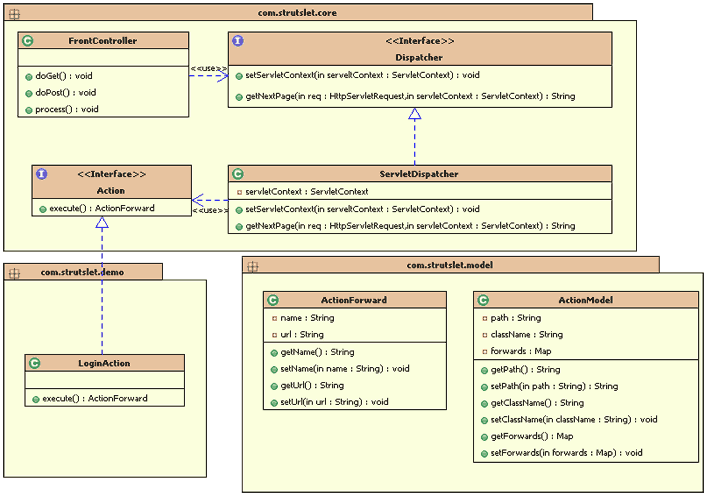
1。前端控制器(frontcontroller):前端控制器提供了一个统一的位置来封装公共请求处理,它的任务相当简单,执行公共的任务,然后把请求转交给相应的控制器。在strutslet中,前端控制器主要作用也在于此,它初始化并解析配置文件,接受每个请求,并简单地把请求委托给调度器(dispatcher),由调度器执行相应的动作(action)。调度器把action返回的url返回给frontcontroller,frontcontroller负责转发。
2。action接口:command模式很好的例子,它是一个命令接口,每一个实现了此接口的action都封装了某一个请求:新增一条数据记录并更新model,或者把某个文件写入磁盘。命令解耦了发送者和接受者之间联系。 发送者调用一个操作,接受者接受请求执行相应的动作,因为使用command模式解耦,发送者无需知道接受者任何接口。
3。dispatcher:调度器,负责流程的转发,负责调用action去执行业务逻辑。由调度器选择页面和action,它去除了应用行为和前端控制器间的耦合。调度器服务于前端控制器,它把model的更新委托给action,又提供页面选择给frontcontroller
4。actionforward:封装了转向操作所需要信息的一个模型,包括name和转向url
5。actionmodel:解析配置文件后,将每一个action封装成一个actionmodel对象,所有actionmodel构成一个map,并存储在servletcontext中,供整个框架使用。
(二)源代码简单分析
1。action接口,只有一个execute方法,任何一个action都只要实现此接口,并实现相应的业务逻辑,最后返回一个actionforward,提供给dispacher调用。
比如,我们要实现一个登陆系统(demo的例子),loginaction验证用户名和密码,如果正确,返回success页面,如果登陆失败,返回fail页面:
我们看到actionforward预先封装了success和fail对象。
3。知道了两个模型是什么样,也应该可以猜到我们的配置文件大概是什么样的了,与struts的配置文件格式类似:
path是在应用中将被调用的路径,class指定了调用的哪个action,forward元素指定了转向,比如我们这里如果是success就转向hello.jsp,失败的话转向fail.jsp,这里配置了demo用到的loginaction。
4。dispacher接口,主要是getnextpage方法,此方法负责获得下一个页面将导向哪里,提供给前端控制器转发。
5。5。原先书中实现了一个workflow的dispatcher,按照顺序调用action,实现工作流调用。而我们所需要的是根据请求的path调用相应的action,执行action的execute方法返回一个actionforward,然后得到actionforward的viewurl,将此viewurl提供给前端控制器转发,看看它的getnextpage方法:
doget()和dopost方法我们都让它调用process方法:
7。最后,web.xml的配置就非常简单了,配置前端控制器,提供启动参数(配置文件所在位置,为空就查找/web-inf/下面的strutslet-config.xml文件),我们把所有以action结尾的请求都交给frontcontroller处理:
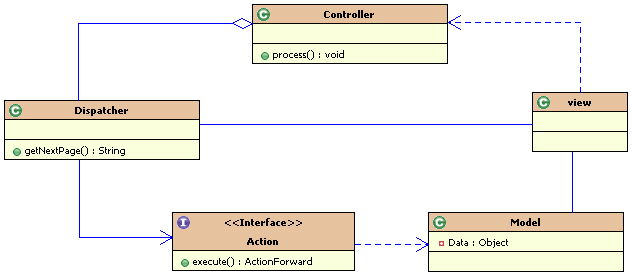
最后,让我们看看整个框架图:
希望保留给有用的人,谢谢。
取这样一个标题太大,吸引眼球嘛@_@。
事实是最近读《j2ee设计模式》讲述表达层模式的那几章,书中有一个前端控制器+command模式的workflow例子,就琢磨着可以很简单地扩展成一个mvc框架。花了一个下午改写了下,对书中所述的理解更为深入。我想这也许对于学习和理解设计模式,以及初次接触struts等mvc框架的人可能有点帮助。因为整个模型类似于struts,我把它取名叫strutslet^_^。学习性质,切勿认真。
(一)完整的类图如下:
1。前端控制器(frontcontroller):前端控制器提供了一个统一的位置来封装公共请求处理,它的任务相当简单,执行公共的任务,然后把请求转交给相应的控制器。在strutslet中,前端控制器主要作用也在于此,它初始化并解析配置文件,接受每个请求,并简单地把请求委托给调度器(dispatcher),由调度器执行相应的动作(action)。调度器把action返回的url返回给frontcontroller,frontcontroller负责转发。
2。action接口:command模式很好的例子,它是一个命令接口,每一个实现了此接口的action都封装了某一个请求:新增一条数据记录并更新model,或者把某个文件写入磁盘。命令解耦了发送者和接受者之间联系。 发送者调用一个操作,接受者接受请求执行相应的动作,因为使用command模式解耦,发送者无需知道接受者任何接口。
3。dispatcher:调度器,负责流程的转发,负责调用action去执行业务逻辑。由调度器选择页面和action,它去除了应用行为和前端控制器间的耦合。调度器服务于前端控制器,它把model的更新委托给action,又提供页面选择给frontcontroller
4。actionforward:封装了转向操作所需要信息的一个模型,包括name和转向url
5。actionmodel:解析配置文件后,将每一个action封装成一个actionmodel对象,所有actionmodel构成一个map,并存储在servletcontext中,供整个框架使用。
(二)源代码简单分析
1。action接口,只有一个execute方法,任何一个action都只要实现此接口,并实现相应的业务逻辑,最后返回一个actionforward,提供给dispacher调用。
- public interface action {
- public actionforward execute(httpservletrequest request,servletcontext context);
- }
比如,我们要实现一个登陆系统(demo的例子),loginaction验证用户名和密码,如果正确,返回success页面,如果登陆失败,返回fail页面:
- public class loginaction implements action {
- private string name="";
- public actionforward execute(httpservletrequest request,
- servletcontext context) {
- string username=request.getparameter("username");
- string password=request.getparameter("password");
- if(username.equals("dennis")&&password.equals("123")){
- request.setattribute("name", name);
- return actionforward.success; //登陆成功,返回success
- }else
- return actionforward.fail; //否则,返回fail
- }
2.还是先来看下两个模型:actionforward和actionmodel,没什么东西,属性以及相应的getter,setter方法:
- /**
- * 类说明:转向模型
- * @author dennis
- *
- * */
- public class actionforward {
- private string name; //forward的name
- private string viewurl; //forward的url
- public static final actionforward success=new actionforward("success");
- public static final actionforward fail=new actionforward("fail");
- public actionforward(string name){
- this.name=name;
- }
- public actionforward(string name, string viewurl) {
- super();
- this.name = name;
- this.viewurl = viewurl;
- }
- //...name和viewurl的getter和setter方法
- }
我们看到actionforward预先封装了success和fail对象。
- public class actionmodel {
- private string path; // action的path
- private string classname; // action的class
- private map<string, actionforward> forwards; // action的forward
- public actionmodel(){}
- public actionmodel(string path, string classname,
- map<string, actionforward> forwards) {
- super();
- this.path = path;
- this.classname = classname;
- this.forwards = forwards;
- }
- //...相应的getter和setter方法
- }
3。知道了两个模型是什么样,也应该可以猜到我们的配置文件大概是什么样的了,与struts的配置文件格式类似:
- <?xml version="1.0" encoding="utf-8"?>
- <actions>
- <action path="/login"
- class="com.strutslet.demo.loginaction">
- <forward name="success" url="hello.jsp"/>
- <forward name="fail" url="fail.jsp"/>
- </action>
- </actions>
path是在应用中将被调用的路径,class指定了调用的哪个action,forward元素指定了转向,比如我们这里如果是success就转向hello.jsp,失败的话转向fail.jsp,这里配置了demo用到的loginaction。
4。dispacher接口,主要是getnextpage方法,此方法负责获得下一个页面将导向哪里,提供给前端控制器转发。
- public interface dispatcher {
- public void setservletcontext(servletcontext context);
- public string getnextpage(httpservletrequest request,servletcontext context);
- }
5。5。原先书中实现了一个workflow的dispatcher,按照顺序调用action,实现工作流调用。而我们所需要的是根据请求的path调用相应的action,执行action的execute方法返回一个actionforward,然后得到actionforward的viewurl,将此viewurl提供给前端控制器转发,看看它的getnextpage方法:
- public string getnextpage(httpservletrequest request, servletcontext context) {
- setservletcontext(context);
- map<string, actionmodel> actions = (map<string, actionmodel>) context
- .getattribute(constant.actions_attr); //从servletcontext得到所有action信息
- string reqpath = (string) request.getattribute(constant.request_attr);//发起请求的path
- actionmodel actionmodel = actions.get(reqpath); //根据path得到相应的action
- string forward_name = "";
- actionforward actionforward;
- try {
- class c = class.forname(actionmodel.getclassname()); //每个请求对应一个action实例
- action action = (action) c.newinstance();
- actionforward = action.execute(request, context); //执行action的execute方法
- forward_name = actionforward.getname();
- } catch (exception e) {
- log.error("can not find action "+actionmodel.getclassname());
- e.printstacktrace();
- }
- actionforward = actionmodel.getforwards().get(forward_name);
- if (actionforward == null) {
- log.error("can not find page for forward "+forward_name);
- return null;
- } else
- return actionforward.getviewurl(); //返回actionforward的viewurl
- }
6。前端控制器(frontcontroller),它的任务我们已经很清楚,初始化配置文件;存储所有action到servletcontext供整个框架使用;得到发起请求的path,提供给dispachter查找相应的action;调用dispatcher,执行getnextpage方法得到下一个页面的url并转发:
- public void init() throws servletexception {
- //初始化配置文件
- servletcontext context=getservletcontext();
- string config_file =getservletconfig().getinitparameter("config");
- string dispatcher_name=getservletconfig().getinitparameter("dispatcher");
- if (config_file == null || config_file.equals(""))
- config_file = "/web-inf/strutslet-config.xml"; //默认是/web-inf/下面的strutslet-config
- if(dispatcher_name==null||dispatcher_name.equals(""))
- dispatcher_name=constant.default_dispatcher;
- try {
- map<string, actionmodel> resources = configutil.newinstance() //工具类解析配置文件
- .parse(config_file, context);
- context.setattribute(constant.actions_attr, resources); //存储在servletcontext中
- log.info("初始化strutslet配置文件成功");
- } catch (exception e) {
- log.error("初始化strutslet配置文件失败");
- e.printstacktrace();
- }
- //实例化dispacher
- try{
- class c = class.forname(dispatcher_name);
- dispatcher dispatcher = (dispatcher) c.newinstance();
- context.setattribute(constant.dispatcher_attr, dispatcher); //放在servletcontext
- log.info("初始化dispatcher成功");
- }catch(exception e) {
- log.error("初始化dispatcher失败");
- e.printstacktrace();
- }
- .....
doget()和dopost方法我们都让它调用process方法:
- protected void process(httpservletrequest request,
- httpservletresponse response) throws servletexception, ioexception {
- servletcontext context = getservletcontext();
- //获取action的path
- string requri = request.getrequesturi();
- int i=requri.lastindexof(".");
- string contextpath=request.getcontextpath();
- string path=requri.substring(contextpath.length(),i);
- request.setattribute(constant.request_attr, path);
- dispatcher dispatcher = (dispatcher) context.getattribute(constant.dispatcher_attr);
- // make sure we don't cache dynamic data
- response.setheader("cache-control", "no-cache");
- response.setheader("pragma", "no-cache");
- // use the dispatcher to find the next page
- string nextpage = dispatcher.getnextpage(request, context);//调用dispatcher的getnextpage
- // forward control to the view
- requestdispatcher forwarder = request.getrequestdispatcher("/"
- + nextpage);
- forwarder.forward(request, response); //转发页面
- }
7。最后,web.xml的配置就非常简单了,配置前端控制器,提供启动参数(配置文件所在位置,为空就查找/web-inf/下面的strutslet-config.xml文件),我们把所有以action结尾的请求都交给frontcontroller处理:
- <servlet>
- <servlet-name>strutsletcontroller</servlet-name>
- <servlet-class>com.strutslet.core.frontcontroller</servlet-class>
- <!--
- <init-param>
- <param-name>config</param-name>
- <param-value>/web-infstrutslet-config.xml</param-value>
- </init-param>
- -->
- <load-on-startup>0</load-on-startup>
- </servlet>
- <servlet-mapping>
- <servlet-name>strutsletcontroller</servlet-name>
- <url-pattern>*.action</url-pattern>
- </servlet-mapping>
最后,让我们看看整个框架图:

 闽公网安备 35060202000074号